
What is MEES?
MEES stands for the Minimum Energy Efficiency Standards. It is a set of regulations — introduced under the Energy Efficiency (Private Rented Property) (England and Wales) Regulations 2015 — that set a minimum EPC rating for rented property.
The standards apply to both residential and commercial (non-domestic) property in England and Wales. This guide focuses on the commercial side.
How does it work?
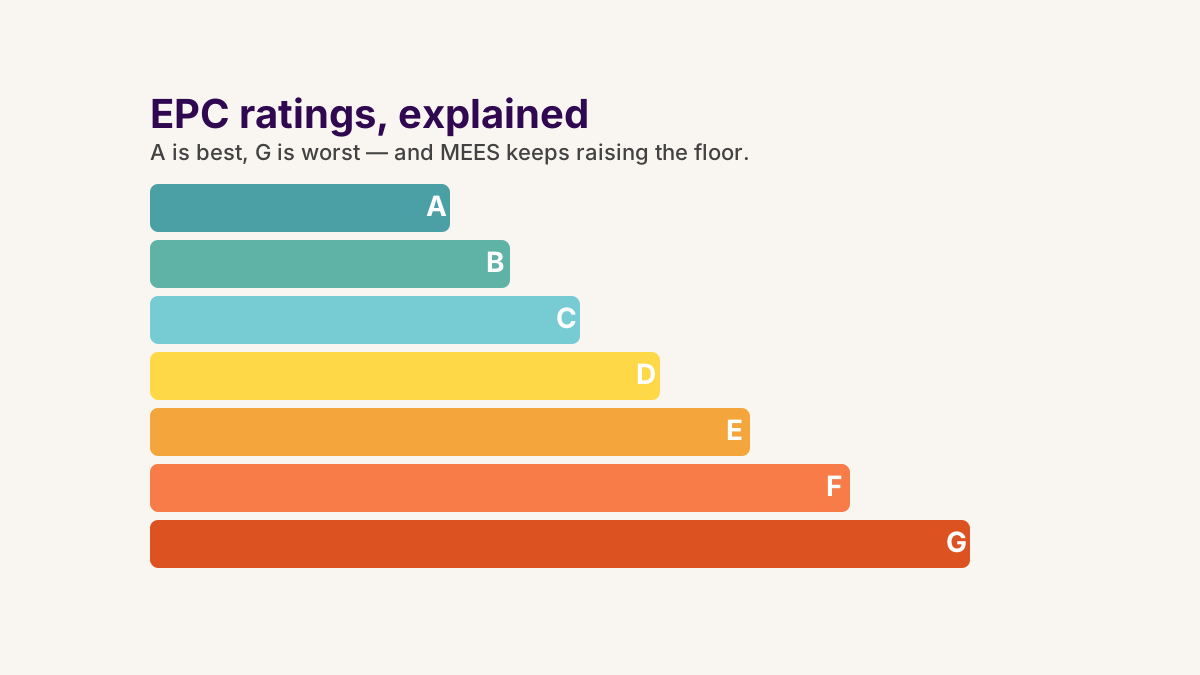
To let a commercial property, the landlord must have a current Energy Performance Certificate (EPC) for the building. The EPC assigns a rating on a scale of A (most efficient) to G (least efficient).
MEES requires that rented commercial property must meet a minimum EPC rating. Since 2018, that minimum has been EPC E for new lettings and lease renewals. The 2028 deadline extends the requirement to cover all existing leases — meaning landlords cannot continue to let sub-threshold property to existing tenants either.
What is an EPC?
An Energy Performance Certificate is a document that estimates a building's energy efficiency based on its physical characteristics — insulation, glazing, heating systems, lighting, and so on. It is produced by an accredited assessor and is valid for ten years.
The EPC rating runs from A (1–25) to G (126+) on a notional scale, though in practice most commercial buildings fall between D and F. An EPC is required whenever a commercial building is sold, let, or built.
What are the key deadlines?
- April 2018: EPC E required for new lettings and lease renewals
- April 2023: EPC E required to continue letting to existing residential tenants (residential only)
- April 2028: EPC E required to continue letting commercial property (all existing leases caught)
The government had previously consulted on a trajectory towards EPC B by 2030 for commercial property, though this tighter target has been delayed. The 2028 E minimum is confirmed legislation.
Are there exemptions?
Yes. Landlords can apply for a registered exemption in specific circumstances:
- All improvements made: All cost-effective measures have been installed and the property still falls below E
- Devaluation: A suitably qualified surveyor confirms that improvements would devalue the property by more than 5%
- Third-party consent: The tenant or a superior landlord has refused consent for works
- New landlord: A six-month temporary exemption for recently acquired property
Exemptions must be registered on the national PRS Exemptions Register and are time-limited.
What happens if a landlord doesn't comply?
Local authorities are responsible for enforcement. Penalties can reach £150,000 per property, calculated based on the length of breach and the property's rateable value. Details of breaches may also be published on the public register.
What does this mean for lenders?
For lenders with exposure to commercial property, MEES creates regulatory and credit risk. A property that becomes unlettable in 2028 has impaired income and exit value. Lenders are increasingly incorporating EPC trajectories into underwriting and loan covenant frameworks.
What should you do now?
The first step is knowing where you stand. For landlords and asset managers, that means an EPC audit across the portfolio — identifying which assets are already compliant, which need modest works, and which are material risks.
Building Atlas can produce that analysis from a list of addresses, with CapEx estimates and a recommended programme of works, in 48 hours.