
Lloyds Banking Group and the National Wealth Fund have announced £500 million of financing to support the retrofit of university estates across the UK.
It's a significant commitment. The programme could modernise up to 300 campus buildings, create up to 4,000 jobs across retrofit supply chains, and takes Lloyds' total retrofit lending commitment to £1 billion.
For university estates teams, this should be welcome news. For many, it will also raise an important question: if funding is becoming available, where should investment be directed first?
The prioritisation challenge
UK universities collectively face an estimated £8.8 billion challenge to modernise and improve the performance of their estates. Many are responsible for large and complex portfolios that include listed buildings, specialist laboratories, ageing teaching blocks, and modern student accommodation — all with very different energy profiles, operational requirements, and investment needs.
Most universities already know which buildings consume the most energy. The challenge isn't identifying poor performers, it's understanding where limited capital will deliver the greatest return.
When an estate contains 20, 50 or 100 buildings, identifying the optimal sequence of retrofit investments becomes a portfolio management problem rather than an engineering exercise:
- Which buildings should be prioritised?
- Which interventions will deliver the greatest carbon and cost reductions?
- Where will investment generate the fastest payback?
- How should projects be sequenced to maximise impact across the estate?
These questions are increasingly important because, while £500 million represents a significant step forward, it addresses only a fraction of the UK's estimated £8.8 billion university retrofit requirement. Capital will remain constrained, making effective investment prioritisation critical.
Funding requires evidence
The Lloyds/NWF programme is structured as lending rather than grant funding. Universities borrow against projected energy savings and carbon reductions, while the National Wealth Fund's £350 million guarantee enables Lloyds to provide longer-term and more flexible financing.
But access to capital is only one part of the equation.
Universities must still demonstrate that proposed investments are commercially and operationally sound. Finance committees, governing bodies and lenders will all want confidence that capital is being allocated to the right projects in the right order.
That requires robust answers to a number of key questions:
- Which buildings should be retrofitted first?
- What interventions are most appropriate for each building?
- What are the projected costs, energy savings and payback periods?
- How should investment be phased across the estate over time?
These questions cannot be answered through a single building survey or by reviewing EPC ratings in isolation. They require a portfolio-wide assessment that compares buildings, ranks opportunities, and creates a clear investment roadmap.
Turning building data into investment decisions
This is the challenge Building Atlas was designed to solve.
Our platform ingests existing building data — including EPCs, energy bills, surveys and SBEM outputs — and rapidly generates prioritised retrofit pathways across an entire estate.
The result is a portfolio-level view of investment opportunities, including intervention costs, projected energy savings, carbon reductions and payback periods for every building assessed.
In one recent assessment of 1,300 buildings, Building Atlas identified 45 retrofit opportunities with payback periods of less than two years — opportunities that might otherwise have taken months of analysis and surveys to uncover, prioritised across the portfolio within days.
The outcome is not simply a list of measures. It is an investment-ready roadmap that helps organisations identify where capital can deliver the greatest impact and strongest returns.
A narrow window of opportunity
The Lloyds/NWF programme is now live.
Universities that can quickly develop credible, data-backed investment plans will be best positioned to access financing and accelerate delivery. Those that delay may find themselves competing for capital alongside a growing number of institutions facing the same challenge.
For estates teams, the question is no longer whether retrofit investment is required. The question is how to identify the projects that should be delivered first.
If you're exploring how to position your estate for retrofit investment, we'd welcome a conversation.
Building Atlas helps portfolio owners and estate teams move from sustainability reporting to retrofit action — generating prioritised, investment-ready retrofit plans across entire building portfolios.
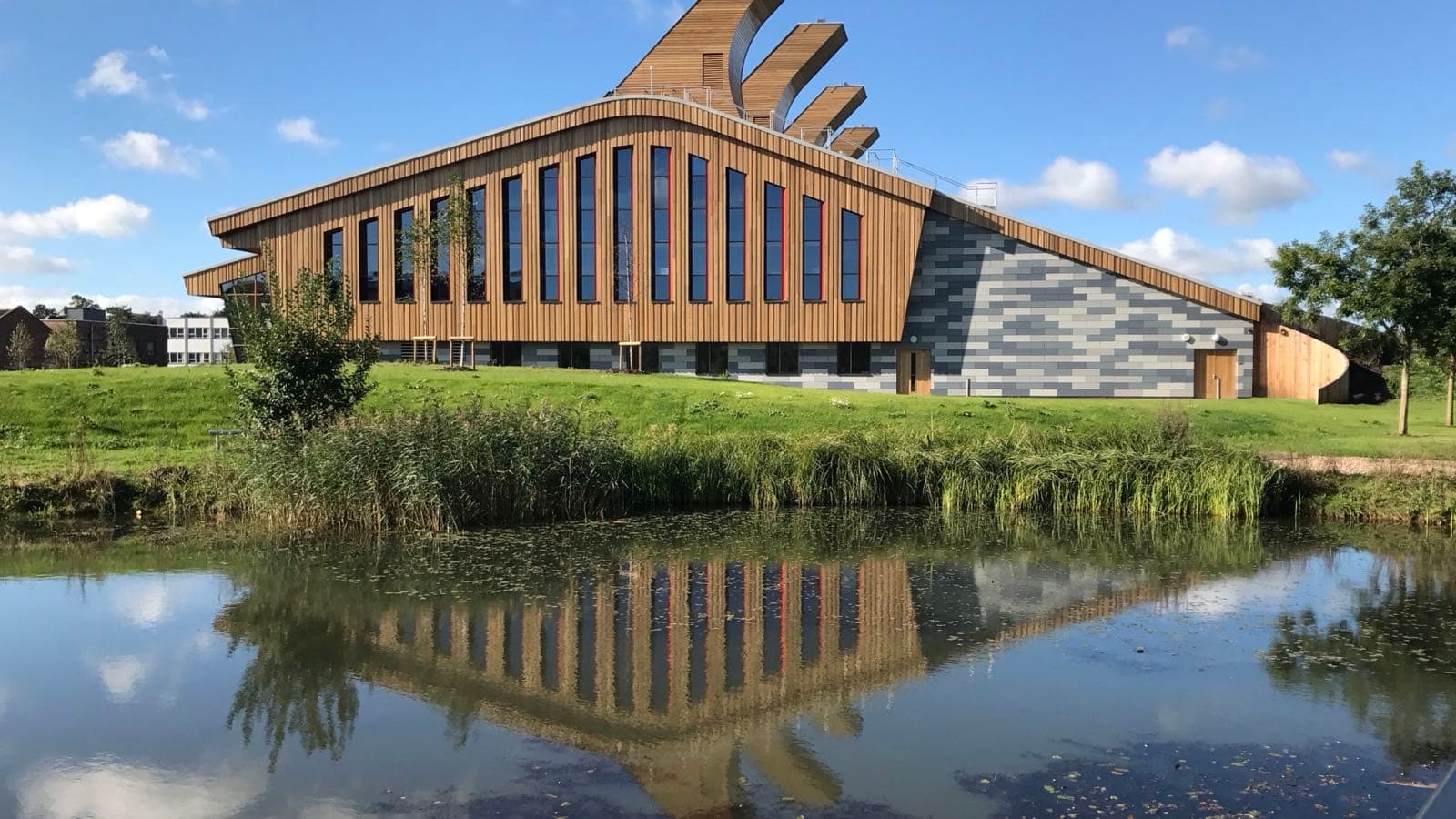
Cover image: GSK Carbon Neutral Laboratory, University of Nottingham Jubilee Campus. Photo by Michael Thomas, CC BY 2.0, via Wikimedia Commons. Cropped and resized.
